Some toys sold online may expose your child to safety hazards. Here’s what you need to know about bargain toys sold on certain platforms.
Some toys purchased online can expose children to safety hazards such as small or sharp parts, batteries that can be easily accessed, or excessive noise volumes. Here’s what you need to know about bargain toys sold on certain platforms.
A 2025 study conducted by an international consumer media organization and published in Protégez-Vous magazine revealed that a number of toys sold on the platforms Shein and Temu pose hazards to young children.
Small parts and accessible batteries
Of the 54 toys intended for children 3 years and under that were tested by International Consumer Research & Testing, 30 had safety issues. “We’re talking about toys with pieces that could hurt young children, like sharp edges,” explains Marie-Eve Shaffer, a reporter for Protégez-Vous. “Some toys had parts that broke off, some of which were so small that children could have put them in their mouths and choked on them.” She adds that the battery compartments on some toys did not close properly, making the batteries easily accessible to babies and toddlers.
These are serious problems. At the Montreal Children’s Hospital, most toy-related injuries are caused by small parts that have been swallowed. “If a toy or a toy part can fit inside a toilet paper roll, it is not safe for children aged 3 or under,” says Liane Fransblow, the hospital’s injury prevention program coordinator. Button batteries, which look like candy, and small magnets are especially dangerous. Every month, the Montreal Children’s Hospital admits about two children who have swallowed button batteries or magnets.
Use caution with squishies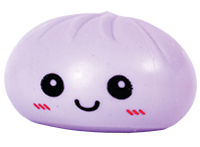
Squishy toys filled with sand or gel are not safe for small children. Children have suffered severe burns caused by squishy sensory toys that have burst after being heated. “We haven’t yet seen this firsthand at the Montreal Children’s Hospital,” says Liane Fransblow. “And the cases reported elsewhere have involved older children.” However, she recommends keeping these toys out of the reach of young children, who might put them in their mouths, bite them, or break them. Squishies contain substances that may be toxic if swallowed.
Non-compliant toys
The Protégez-Vous study found toxic substances exceeding Canada’s acceptable limits in two toys. It also identified sensory balls that produced sounds of up to 115 decibels. However, under Canadian law, toys cannot emit a sound exceeding 100 decibels.
In short, the study found that only 1 of the 54 toys tested complied with Canadian toy safety standards, and the online platforms did not always take action when problems with their products were reported to them. In theory, toys sold online are required to comply with Canadian standards. These standards prohibit the sale of products that pose a health or safety risk and require the industry to report incidents to Health Canada as well as to the company that manufactured the toy. However, it seems there’s no guarantee that products purchased online comply with these standards.
“Think twice before buying toys on Shein or Temu,” warns Marie-Eve Shaffer. “These platforms say they have monitoring mechanisms in place, but they aren’t perfect, and many non-compliant products are still sold.”
How can you make sure a toy is safe?
- Choose toys that are washable, non-toxic, and durable.
- Choose sturdy toys with no broken parts and no sharp or pointed edges.
- Avoid toys with small parts, and make sure that small pieces—such as stuffed animal eyes or the magnets on a toy train—don’t come loose.
-
If a toy runs on batteries, make sure the battery compartment closes securely and that your child cannot open it.
- Follow the age recommendations provided by the manufacturer on the packaging, and keep toys belonging to older siblings out of the reach of younger children.
- Avoid loud toys and toys with long cords.
- Dispose of packaging promptly, as it may pose a choking or strangulation hazard.
-
Choose toys that display the manufacturer’s or importer’s contact information.
- Check to see if your child’s toys have been recalled by visiting the Government of Canada’s recall site: Recalls and safety alerts.
|
-
Avoid toys with small parts, accessible button batteries, magnets, or water beads.
-
Be wary of cheap toys sold on online marketplaces, as they may pose a safety risk.
-
Follow the age recommendations on the packaging and choose sturdy toys to help reduce risk.
|
| Source: Naître et grandir magazine, November–December 2026
Research and copywriting: Julie Leduc
|
Photos: Nicolas St-Germain, GettyImages/Kerkez